
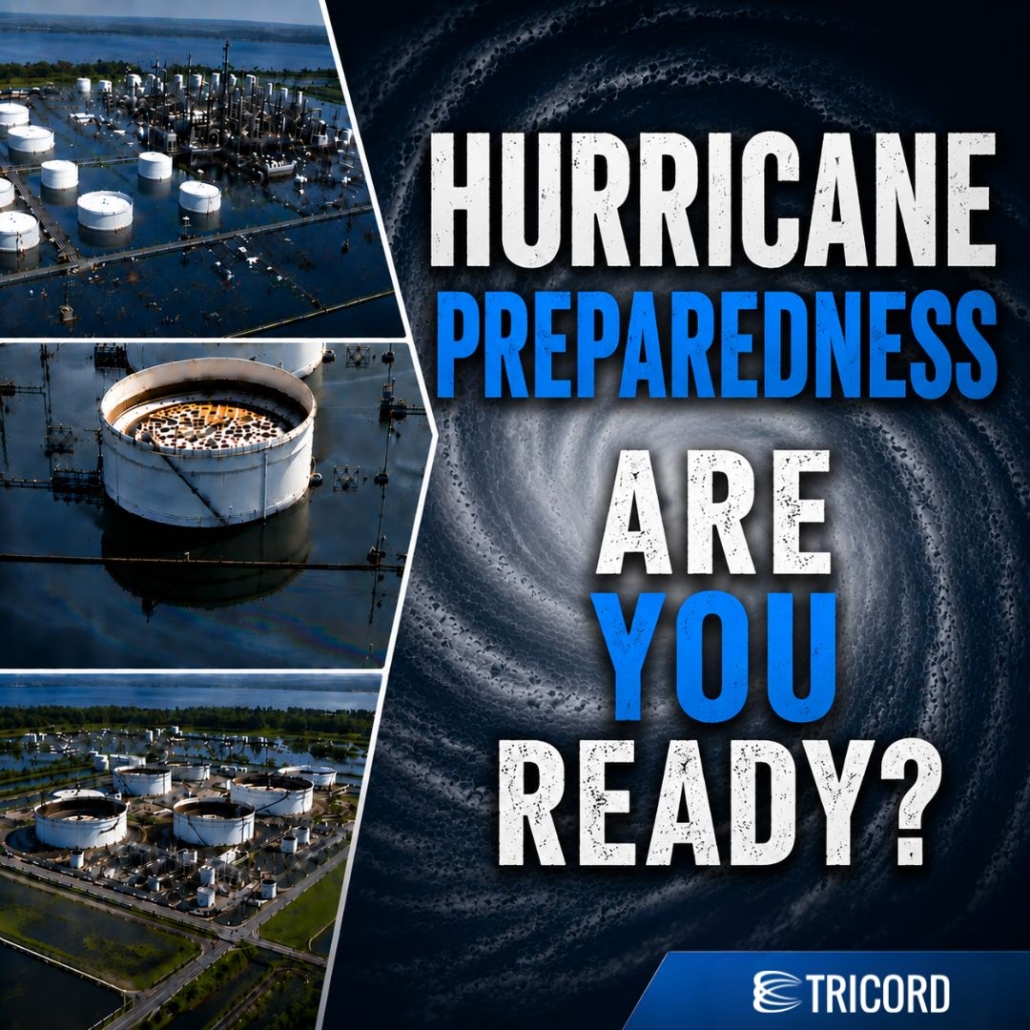
Hurricane Preparedness: Are You Ready?
Hurricane season starts June 1. The annual tropical forecasts from Colorado State University (CSU) and the National Oceanic and Atmospheric Administration (NOAA) are predicting the “2026 Atlantic basin hurricane season will have below-normal activity.
| 2026 CSU Forecast | 2026 NOAA Forecast | 1991-2020 Average | |
| Named Storms | 13 | 8-14 | 14.4 |
| Hurricanes | 6 | 3-6 | 7.2 |
The CSU forecast summary states: “Current weak La Niña conditions are likely to transition to El Niño in the next few months, with the potential for a moderate/strong El Niño for the peak of hurricane season. Sea surface temperatures in the western tropical Atlantic are warmer than normal but slightly cooler than normal in the eastern and central tropical Atlantic. We anticipate El Niño being the dominant factor for the upcoming hurricane season, driving increased levels of tropical Atlantic vertical wind shear. We are forecasting a below-average probability for major hurricane landfalls along the continental United States coastline and in the Caribbean. As with all hurricane seasons, coastal residents are reminded that it only takes one hurricane making landfall to make it an active season. Thorough preparations should be made every season, regardless of predicted activity.”
Are you ready? In July 2023, EPA Region 6 issued a news release reminding facility operators of their obligation to prepare for severe weather events to prevent or minimize chemical releases that may result from storm disrupted operations.
Here are some tips to help your business/facility be better prepared. Ideally, hurricane preparation is best done outside/before hurricane season (June 1 through November 30), and certainly before a storm threat impacts your area. There are plenty of resources from FEMA and other entities that are readily available via your favorite search engine.
Develop a hurricane plan
- Pre-planning allows for careful consideration of issues before an emergency.
- Many factors are too complex to study in the limited time immediately preceding a hurricane.
- A properly designed plan is phased, and when followed, should provide ample time to prepare for a hurricane.
- The plan should be designed to improve communications both internally and externally.
- The plan provides a common platform for facility personnel to base their actions.
- The plan identifies who is responsible for various actions and when they will be undertaken.
- The primary objective of a hurricane plan is to provide for the safety of personnel, property, and community.
- It is our intent to have a plan that will minimize the undesirable effects of a hurricane on our people, property, and community.
- A secondary objective is to put the facility in the best position possible to avoid and/or recover from business interruptions caused by the storm.
- A facility’s hurricane plan should interface with local emergency plans.
The hurricane plan will detail preparation tasks that will be required of most sectors of an organization; every department should have a checklist, some more extensive than others. Tasks will include some of the following (in no particular order):
- Designation of weather monitoring responsibilities
- Meeting schedule
- Planned sequence for shutdown of operation
- Employee communication
- Document expected evacuation destinations of employees
- Preservation of important business documentation/systems; may include:
- Document scanning, computer file backup, use of remote file servers, moving hard copies to remote locations or away from flood prone locations;
- Move equipment from areas vulnerable to flooding (upper floors of buildings) and/or away from windows;
- Protect sensitive electrical equipment from power surges associated with intermittent power losses/restorations (unplug where possible).
- Preparation of facility infrastructure
- Backup generator/stormwater pump fuel
- If facility wastewater collection system can accumulate oil that can be released during flooding, take actions to remove or minimize prior to storm arrival
- Move company vehicles, cranes, etc. to higher ground
Personnel evacuating an office or facility should make sure they take the things they may need to perform post-storm support functions remotely. Plant environmental personnel should always assume those evacuating will not be able to return for weeks and prepare for the storm aftermath with the following considerations in mind:
- Keep copies of environmental and emergency reporting documents on hand, such as, force majeure requests, enforcement discretion requests, emergency notification written follow reports, etc.
- Assume remote access to file servers is not available.
- Keep local copies of key contact information, telephone numbers, etc.
Every hurricane is different and involves many complex factors. The Response Team should develop a Hurricane Plan through a phased decision process:
- Consider the decision to move through progressive phases is a function of the complex factors of the response.
- These factors listed in the plan will be evaluated to recommend when the facility should progress or fall back to the next phase.
- Since no one criteria alone can be used to make this decision, the facility management team will evaluate personnel safety, hurricane status, highway access and other issues to recommend when the plant should implement the next phase.
- Forecasts and weather updates from the National Hurricane Center and other weather providers will be used to assist in making decisions to progress or fall back through the phase process.
- The facility manager or designated incident commander will ultimately make the decisions.
- Establish a “first-back” protocol for post-storm. In other words, how personnel will return to the facility post-storm, whether there was a complete evacuation or when non-essential personnel return.
Hurricane plan progressive phase process example
TSWA: time before the forecasted Tropical Storm Wind Arrival
- TSWA 72-96 hours
- Alert phase – notify facility employees of potential threat
- Factors – location, forecast path, forecast development, and potential variance of forecast path and development of storm
- TSWA 48-60 hours
- Watch phase – tropical storm/hurricane poses a threat to facility
- Begin coordination of people/resources
- Factors
- Direction and speed of hurricane (will the hurricane move toward the facility, given its current direction, speed and other factors).
- Category of hurricane.
- Is the facility raw material supply likely to be threatened?
- TSWA 40-48 hours
- Prepare the facility for high winds, flooding, and loss of power;
- Prepare the facility for potential slowdown or shutdown.
- Consider release of some personnel to begin minimization of facility activities to better focus on storm prep.
- Factors
- Direction and speed of hurricane (will the hurricane hit the facility or cause high winds and/or flooding at the facility, and when, given its current direction and speed);
- Category of hurricane;
- County/parish evacuations – facility and personnel’s home areas.
- Personnel safety.
- Loss of escape routes for personnel.
- Potential for loss of power.
- Potential for loss of raw material supply.
- Potential for loss of product movement capabilities.
- Need to maintain or increase tank inventory levels.
- Flood protection condition
- TSWA 24-40 hours
- Begin the process of shutting or slowing down the facility
- Factors – same as #3
- TSWA 0-16 hours
- Complete the shutdown and evacuation of the facility.
- Factors – same as #3
- De-escalation to lower phases is a function of reversing the preceding sequence in a “step-down” function as weather conditions dictate and activation of “first-back” protocol.
An important part of any hurricane plan process is the post-storm review/critique. Any time the plan is exercised, drill or real event, a post event review must be conducted. This is the best opportunity to identify and correct weaknesses. As soon as the storm threat has passed or a drill is conducted, perform a critique while it is fresh in the participants memory, then complete the actions identified for an improved plan.
Contact your TRICORD CRM if you have any questions or need any assistance.

